

Breakthrough VR Innovations Push Sickness-Free Gaming Forward
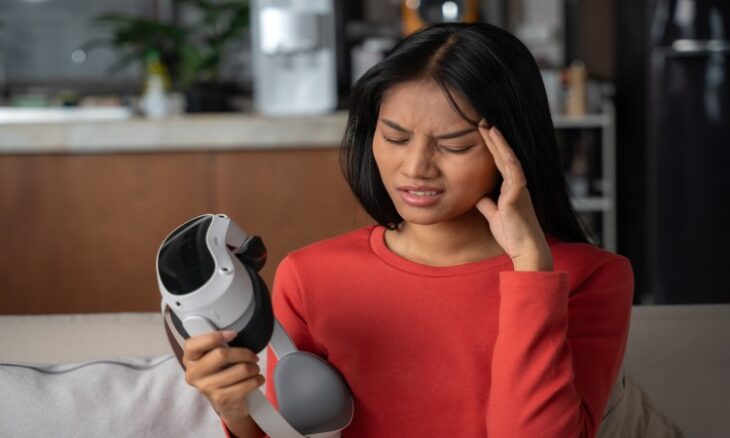
Virtual reality has transformed how we explore digital worlds, yet motion sickness remains a stubborn barrier for many users. The industry has witnessed years of excitement around immersive entertainment, but discomfort such as nausea, dizziness, and disorientation continues to limit long play sessions and slow broader headset adoption. Developers and hardware manufacturers are now focused on eradicating the issue as new technologies reshape expectations for a sickness-free experience.
The underlying cause of VR motion sickness stems from a conflict between visual input and the inner ear’s vestibular system. When the eyes convey a sense of movement while the body remains still, the brain receives mixed messages. This mismatch disrupts normal motion perception and triggers physical unease. The effect becomes stronger when the virtual environment displays rapid acceleration or abrupt directional changes that the body cannot replicate. Some individuals are more sensitive than others based on personal history with motion sickness, sensory responsiveness, or the specific nature of the VR content they use. A further contributor comes from proprioceptive mismatches, where the visual representation of limb movement does not align with physical sensation. This inconsistency becomes more noticeable during complex interactions and intensifies overall discomfort.
Recent developments in VR technology offer multiple solutions to reduce these sensory conflicts. Hardware improvements, such as six-degrees-of-freedom tracking, provide more accurate alignment between head and body movements and the virtual environment. This level of spatial tracking helps reduce confusion by synchronising motion cues. New locomotion systems, including omnidirectional treadmills and advanced full-body tracking, enable users to move naturally through digital spaces. By bringing virtual movement closer to physical movement, these systems significantly lessen the risk of sickness.
Software adjustments also play a major role. Comfort-focused movement settings replace continuous locomotion with teleportation, reducing sudden accelerations that often trigger nausea. Developers increasingly refine visuals by narrowing the field of view during movement or applying vignette effects to reduce sensory overload. Adaptive systems monitor user behaviour in real time and make instant adjustments when signs of discomfort appear. Specialised therapy platforms designed to reduce VR sickness, such as systems built around controlled exposure and calming sensory cues, are now being used to provide accessible comfort solutions.
At the same time, VR headsets have evolved to become lighter, faster, and more comfortable. Higher refresh rates and lower latency provide smoother visual flow, reducing the lag that often causes orientation issues. Adjustable lens settings help users tailor the image to their vision, reducing strain and improving clarity. Broader peripheral displays provide natural visual anchoring, helping prevent the tunnel vision effect that can worsen nausea. Researchers are also experimenting with galvanic vestibular stimulation, a technique that sends subtle electrical signals to the inner ear to simulate movement. This approach may one day eliminate motion perception conflicts altogether.
Industry trends highlight a growing commitment to personalised VR comfort. Hybrid locomotion techniques that merge physical movement with intuitive tracking are becoming common. Streaming VR experiences increasingly incorporate real-time sickness detection that adapts to each user’s tolerance level. Designers are also devoting more attention to ergonomics and accessibility to ensure that training, education, therapy, and gaming experiences accommodate a wider audience. Ongoing collaboration among scientists, engineers, and clinical researchers continues to translate motion sickness studies into practical consumer-ready tools.
Users can minimise discomfort by building tolerance gradually through repeated short sessions. Calibrating the headset properly ensures clearer visuals, and regular breaks help the vestibular system stabilise. Those with higher sensitivity may rely on anti-nausea aids or adjust in-app movement settings to reduce intensity.
Together, these advancements are steadily closing the gap between immersive fantasy and physical comfort. The combination of refined hardware, smarter software, and user-centred design signals a future where motion sickness is no longer seen as an unavoidable part of VR gaming but rather a problem on the verge of disappearing.